
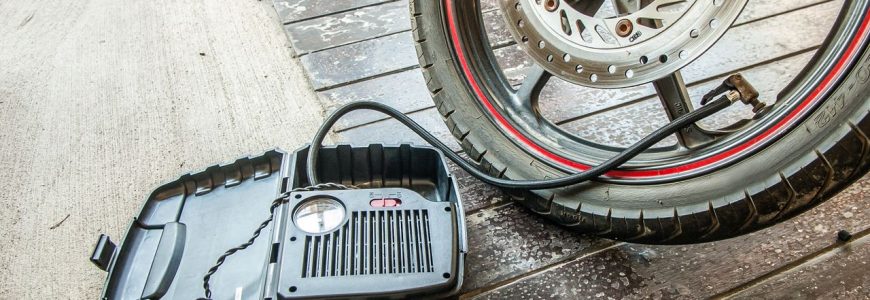
Air compressors can make tyre inflation faster, more convenient, and easier to manage, particularly for workshops, garages, farms, construction sites, and drivers who regularly maintain several vehicles. Instead of relying entirely on a small portable pump or visiting a service station, a suitable compressor can provide a consistent supply of compressed air whenever it is needed. However, choosing the right equipment requires more than simply looking at the size of the machine or its maximum pressure rating. When comparing air compressors for sale, it is important to consider airflow, tank capacity, operating pressure, portability, and the type of tyres you expect to inflate.
Correct tyre inflation is also an important part of routine vehicle maintenance. Tyres that are inflated below or above the manufacturer’s recommended pressure can affect handling, braking, ride comfort, and tread wear. Maintaining the correct pressure can also support efficient vehicle operation. An air compressor does not automatically make tyre inflation safer or more accurate, though. The compressor needs to be paired with a suitable inflation gun, hose, gauge, and fittings, while pressure should always be checked against the vehicle or tyre manufacturer’s specifications.
Whether you need equipment for occasional personal use or frequent workshop duties, understanding how compressors work for tyre inflation can help you choose a practical setup. The goal is not necessarily to buy the biggest compressor available. Instead, the right choice is one that can deliver sufficient airflow and pressure without being unnecessarily expensive, difficult to move, or unsuitable for the environment in which it will be used.
Why Use an Air Compressor for Tyre Inflation?
An air compressor draws in atmospheric air, compresses it, and stores or supplies it for later use. When connected to an appropriate inflation tool, that compressed air can be directed into a tyre through the valve stem.
For occasional inflation, a compact compressor may be more than adequate. A household garage setup might only need to top up passenger-car tyres from time to time. A commercial workshop, on the other hand, may inflate numerous tyres throughout the day and therefore needs equipment capable of handling repeated use.
One major advantage is speed. A compressor with sufficient airflow can add air considerably faster than a small hand-operated or low-powered electric pump. This becomes particularly useful when working with larger tyres, multiple vehicles, or equipment that has been sitting unused for an extended period.
Pressure and Airflow Are Both Important
Pressure and airflow are related, but they are not the same specification.
Pressure is normally expressed in bar or pounds per square inch (PSI). It indicates the force available from the compressed air system. Airflow is commonly expressed as litres per minute (L/min) or cubic feet per minute (CFM), depending on the equipment and market.
A compressor can have a high maximum pressure rating without necessarily being particularly fast at inflating a tyre. Airflow determines how quickly the compressor can replenish and deliver compressed air.
For tyre inflation, look beyond the headline maximum pressure figure. Consider the compressor’s usable airflow and how those specifications compare with the demands of your application.
What Compressor Size Do You Need?
There is no single compressor size that is suitable for every tyre inflation job. Passenger vehicles generally have relatively modest air requirements, while larger commercial vehicles, agricultural machinery, trailers, and off-road equipment can require substantially more air.
A small portable compressor may be convenient for occasional top-ups. A larger stationary unit may be more appropriate for a busy workshop where tyres are inflated frequently.
Factors worth considering include:
- Passenger vehicles usually require less air volume than heavy commercial or agricultural tyres.
- Frequent inflation places greater demands on the compressor than occasional top-ups.
- Larger tyres can require more air and therefore take longer to inflate.
- A larger receiver tank can provide a reserve of compressed air for short inflation tasks.
- Continuous or repeated use may require a compressor designed for a heavier duty cycle.
Choosing capacity based solely on the vehicle you currently own can also be limiting. If the compressor will be used for other pneumatic equipment later, it may be sensible to consider those requirements before purchasing.
Understanding Tank Capacity
The receiver tank stores compressed air so the compressor does not need to run continuously every time air is required.
Tank size is usually measured in litres. A larger tank provides a greater stored-air reserve, which can be useful when several inflation tasks are performed in succession.
However, a larger tank does not necessarily mean faster inflation. Once the stored air is depleted, the compressor’s pump and airflow capacity become important again.
For occasional tyre maintenance, a modest receiver can be practical and easier to transport. In a professional workshop, a larger tank may help smooth out demand and reduce how frequently the motor starts and stops during certain tasks.
Portable Versus Stationary Compressors
Portability is another major consideration.
Portable compressors are useful when tyres need to be inflated in different locations. They can be moved around a garage, loaded into a service vehicle, or transported to equipment that cannot easily be brought to the compressor.
Stationary compressors are generally better suited to permanent workshop installations. They can offer greater capacity and may support several pneumatic applications when correctly configured.
Think about where the compressor will actually be used. A powerful machine that is difficult to move may be less convenient than a smaller unit that can easily reach the vehicle.
The Importance of a Reliable Pressure Gauge
A compressor can supply the air, but accurate pressure measurement is essential.
The tyre should be inflated according to the recommended pressure supplied by the vehicle or tyre manufacturer. This information may be found on the vehicle itself, in its documentation, or through manufacturer guidance. The maximum pressure printed on a tyre should not automatically be treated as the vehicle’s recommended operating pressure.
A good-quality inflation gauge can help the operator monitor pressure while adding air. Digital and analogue gauges are both available, but accuracy and proper maintenance matter more than appearance.
Pressure should be checked when the tyres are in an appropriate condition according to the manufacturer’s guidance. If pressure readings seem inconsistent, the gauge or inflation equipment may require inspection or replacement.
Don’t Overlook the Hose and Fittings
The compressor is only one part of a tyre inflation system.
The hose needs to be suitable for the operating pressure and environment. Connections should fit securely, and the inflation chuck should engage properly with the tyre valve.
Poor-quality or damaged fittings can cause leaks and make inflation frustrating. A leaking connection can also result in misleading pressure readings because air is escaping while the tyre is being filled.
Before use, inspect the hose, connectors, chuck, and gauge. Damaged components should be replaced rather than improvised or repaired in a way that compromises their pressure rating.
Safety Considerations During Tyre Inflation
Compressed air contains stored energy, so basic precautions should always be followed. Tyres can also present hazards if they are damaged, incorrectly fitted, or inflated improperly.
Never assume that a tyre is safe simply because it accepts air. Visible damage, unusual bulges, severe tread problems, valve issues, or other signs of tyre failure should be assessed by a suitably qualified professional rather than ignored during inflation.
Useful precautions include:
- Follow the vehicle and tyre manufacturer’s recommended pressure.
- Inspect tyres and valve areas before inflation.
- Use equipment rated for the pressure involved.
- Keep hoses and fittings in good condition.
- Stand clear of damaged or visibly compromised tyres.
- Avoid exceeding the manufacturer’s specified pressure.
- Stop if the tyre behaves unusually during inflation.
Extra caution is appropriate when dealing with large commercial, agricultural, or specialised tyres because their size and construction can create significantly different risks from ordinary passenger-car tyres.
Oil-Lubricated and Oil-Free Compressors
Another distinction is whether the compressor uses oil lubrication.
Oil-lubricated compressors are common in many workshop environments and can be durable when maintained correctly. They require appropriate servicing and oil checks according to the manufacturer’s instructions.
Oil-free compressors eliminate the need for compressor oil and can be convenient for certain applications. They may also be useful where avoiding potential oil contamination is important.
For straightforward tyre inflation, either type can work when appropriately specified. The better choice depends on expected workload, maintenance requirements, noise considerations, portability, and the other tasks the compressor will perform.
Noise, Power and Operating Environment
Compressor noise can become an important issue in a home garage or enclosed workspace. Larger machines often produce substantial operating noise, although specific noise levels vary considerably between models.
Electrical requirements should also be checked before installation. A compressor needs a suitable power supply, and larger units can place greater demands on electrical circuits.
Ventilation matters as well. Compressors should be installed and operated according to the manufacturer’s instructions, with adequate clearance and appropriate environmental conditions. Keeping ventilation openings clear helps the equipment operate as intended.
If the compressor will be used outdoors or in a dusty environment, the operating conditions should be considered before purchase. Some machines are better suited to demanding environments than others.
Maintenance Helps Keep Inflation Equipment Reliable
Regular maintenance can extend the useful life of a compressor and reduce the chance of unexpected problems.
The exact maintenance schedule depends on the compressor design. Manufacturer instructions should take priority over generic recommendations.
Common maintenance considerations include checking for air leaks, keeping filters clean, inspecting hoses, draining moisture from applicable receiver tanks, and following specified servicing intervals.
Moisture can accumulate inside compressed-air systems, particularly under certain environmental conditions. Where a receiver tank requires draining, this should be done according to the manufacturer’s safety instructions.
Ignoring basic maintenance can gradually reduce performance. A compressor that once inflated tyres efficiently may begin taking longer if filters become restricted, leaks develop, or other components deteriorate.
Choosing a Compressor for Different Tyre Applications
A useful way to narrow down your options is to consider the workload rather than simply the tyre size.
For occasional passenger-car use, portability and convenience may matter more than a very large receiver tank. A compact unit with appropriate pressure and airflow can handle routine top-ups without occupying much workshop space.
For a tyre shop or busy automotive workshop, repeated use changes the equation. Higher airflow, greater receiver capacity, appropriate duty-cycle characteristics, and durable components become more significant.
For trucks, agricultural machinery, caravans, trailers, and off-road vehicles, the volume of air required can increase substantially. In these situations, selecting equipment based on real airflow requirements is particularly important.
The same compressor may also be used for blowing dust from equipment, operating certain pneumatic tools, or other workshop applications. If that is the case, those additional requirements should be included when assessing compressor specifications.
Making a Practical Purchasing Decision
The best compressor is not necessarily the largest, most powerful, or most expensive option. It is the one that matches the intended workload and provides enough capacity without creating unnecessary cost or inconvenience.
Before making a purchase, consider how often tyres will be inflated, how large the tyres are, whether the compressor needs to be moved, and whether other pneumatic tools will eventually be connected to the same system.
Also consider the availability of replacement parts and routine servicing. A compressor that is easy to maintain can be more practical over its working life than a machine selected purely because of an attractive initial specification.
For buyers comparing air compressors for sale, looking at the complete system rather than one headline number is especially useful. Pressure, airflow, tank capacity, duty cycle, power requirements, portability, fittings, and intended workload should all form part of the decision.
Getting More Value From Your Compressor
A compressor purchased for tyre inflation can potentially become a useful part of a wider workshop setup.
With the correct accessories and manufacturer-approved operating conditions, compressed air can support various tasks beyond tyres. However, each pneumatic tool has its own airflow and pressure requirements, so the compressor should be checked against those specifications before use.
Avoid assuming that a compressor capable of inflating tyres will automatically operate every pneumatic tool effectively. Some tools consume considerably more air than tyre inflators, and a machine that works perfectly for occasional inflation may struggle with continuous tool operation.
For tyre maintenance alone, a correctly matched compressor, reliable gauge, suitable hose, and secure inflation chuck are often more important than unnecessary capacity. Good equipment selection combined with careful pressure checking provides a practical approach to maintaining tyres efficiently and consistently.
A compressor can make routine tyre inflation considerably more convenient, but the equipment should always be treated as part of a complete maintenance system. Selecting appropriate specifications, keeping accessories in good condition, following manufacturer instructions, and using the correct tyre pressure all contribute to safer and more reliable results.